Line Routing
Routing product-contact lines across hygienic process areas.
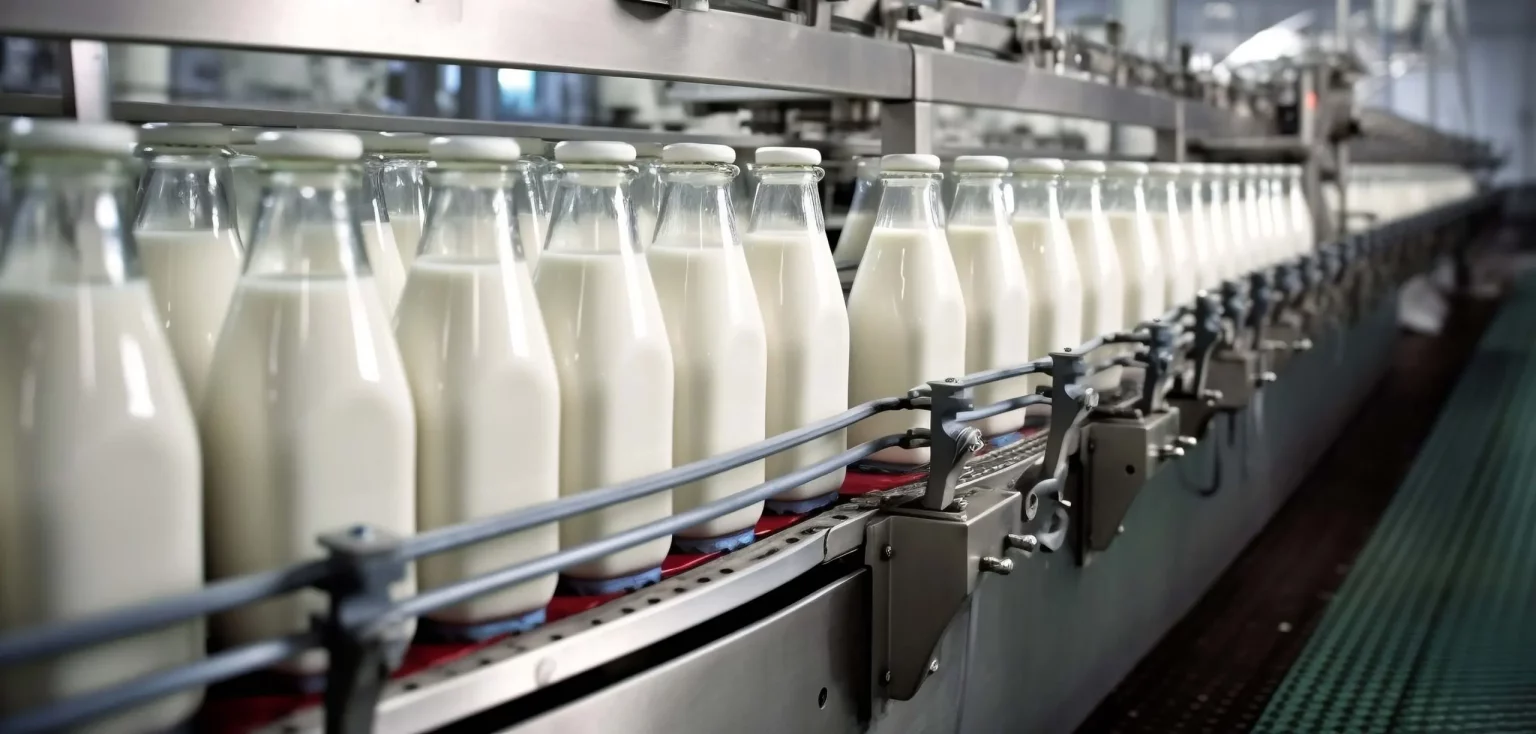 Dairy ProcessingPasteurizers, CIP systems, transfer lines
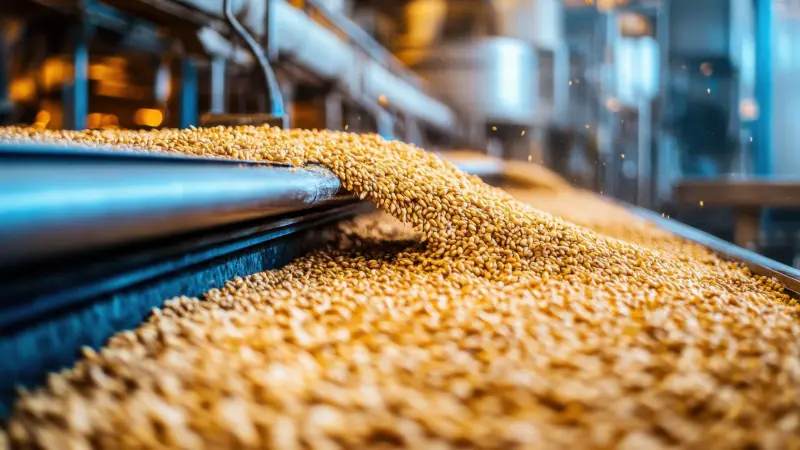 Food ProcessingSanitary fittings, valves and tubing
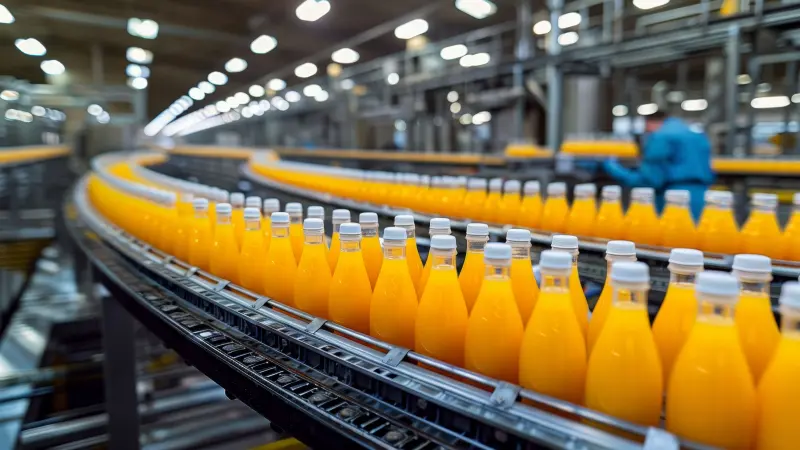 Beverage LinesBottling, mixing and hygienic transfer
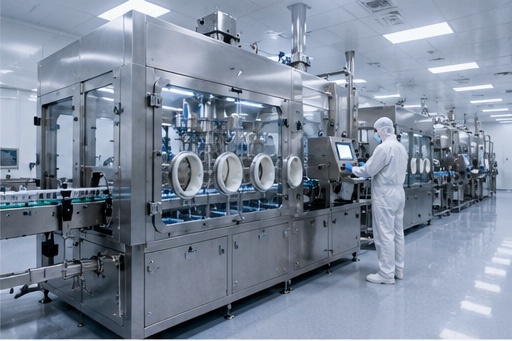 PharmaceuticalHigh-purity 316L and documentation
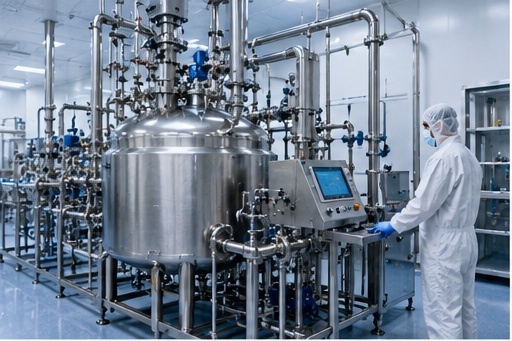 BiotechnologyBioreactors, skids and cell culture support
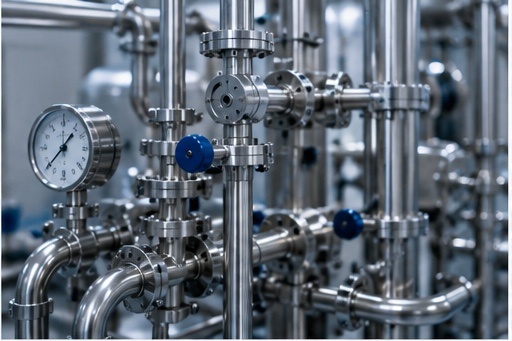 OEM / ContractorsProject RFQ support and secondary supply
Sanitary Fittings
ASTM A403 wrought stainless steel buttweld elbows and tees for industrial pipe systems. 304/316L per ASME B16.9.
Applications
Elbows and tees are normally sourced by size, connection type, material and quantity from drawings or BOMs.
Routing product-contact lines across hygienic process areas.
Tee and elbow packages for transfer and CIP layouts.
Fitting packages supplied from project lists and drawings.
Sizes & Dimensions
Long-radius (LR = 1.5×D) and short-radius (SR = 1.0×D) elbows in 90° and 45°. Equal and reducing tees for all schedules per ASME B16.9.
| NPS | OD (mm) | 90° LR (mm) | 45° LR (mm) | Tee Center | Schedule Range |
|---|---|---|---|---|---|
| ½" | 21.3 | 38 | 16 | 25 | Sch 10S–80S |
| ¾" | 26.7 | 38 | 19 | 29 | Sch 10S–80S |
| 1" | 33.4 | 38 | 22 | 38 | Sch 10S–80S |
| 1½" | 48.3 | 57 | 29 | 57 | Sch 10S–80S |
| 2" | 60.3 | 76 | 35 | 64 | Sch 10S–80S |
| 3" | 88.9 | 114 | 51 | 86 | Sch 10S–80S |
| 4" | 114.3 | 152 | 64 | 105 | Sch 10S–80S |
| 6" | 168.3 | 229 | 95 | 143 | Sch 10S–80S |
| 8" | 219.1 | 305 | 127 | 178 | Sch 10S–80S |
Operating Conditions
Pressure rating depends on schedule (wall thickness) and temperature. Buttweld joints develop full pipe strength when properly welded.
Actual ratings depend on size, material and operating conditions. Confirm via RFQ for project-specific requirements.
Standards & Compliance
Full documentation packages available including MTR, 3.1 certificates, surface roughness reports and pressure test records.
Wrought austenitic SS pipe fittings spec.
Factory-made wrought buttwelding fittings standard.
Seamless/welded austenitic SS pipe specification.
Process piping design code.
European Pressure Equipment Directive compliance.
Materials for sour gas service applications.
Chemical passivation treatments for stainless steel.
Material test certificate with traceability.
Product Variants
Multiple variants available to match your application requirements. Browse related products for complete process line coverage.
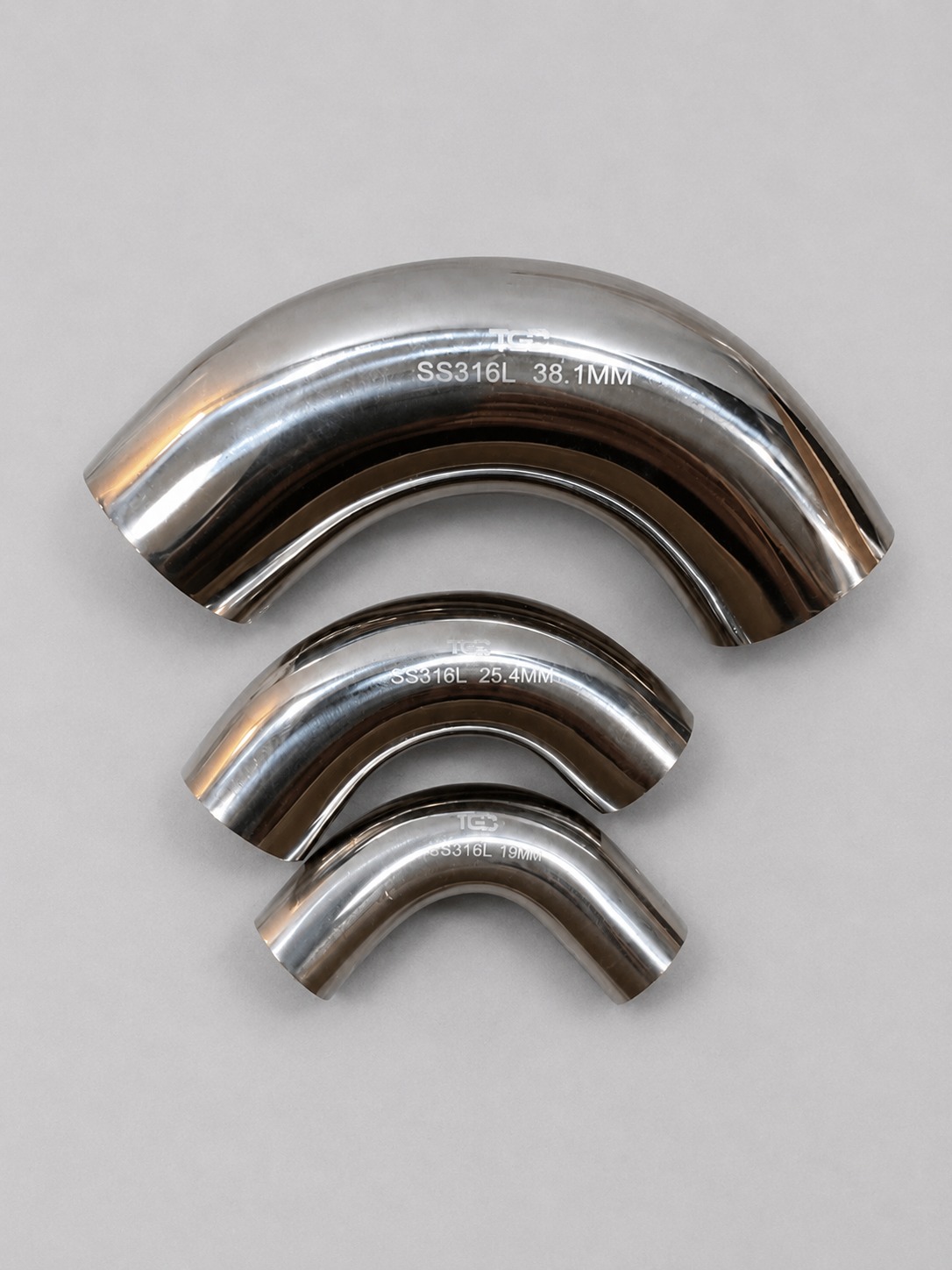
Standard 90° elbow with 1.5×D bend radius. Most common for general industrial service.
Request quote →90° elbow with 1.0×D radius for tight installations. Higher pressure drop.
Request quote →45° bend for line offsets and direction changes. Lower turbulence than 90°.
Request quote →Three-port branch fittings — equal (same size all ports) or reducing.
Request quote →Technical Overview
Dimensional confirmation should follow supplier drawings and project specifications.
| Requirement | Typical Information Needed |
|---|---|
| Product Type | 90° elbow, 45° elbow, equal tee, reducing tee by RFQ |
| Material Grade | 304 / 316L stainless steel |
| Connection | Tri-clamp, weld end or mixed connection by RFQ |
| Size | Nominal sanitary tube size / OD |
| Documentation | MTR / finish notes / drawings by RFQ |
Include fitting type, size, connection, material, quantity and drawing/BOM references.
Material certificates, finish notes, inspection requirements, heat traceability and supplier documentation can be included in the quotation package.
Send fitting list, sizes, connection types, material and quantity.
Download the product datasheet for technical specifications, dimensional references, material data, applicable standards and RFQ guidance. Suitable for procurement, engineering review and project documentation.
Common Questions
Engineering and procurement questions we hear most often. For project-specific guidance, send your application details via RFQ.
Buttweld: pipe ends butted together and welded around the joint — preferred for ≥2" pipe and high-pressure service. Socket-weld: pipe inserted into socket and welded around outside — easier for small bore (≤2") but creates a crevice.
For sanitary or high-purity service, neither is ideal — use orbital-welded sanitary fittings instead. Industrial socket-weld is fine for utility and low-criticality service.
304: general-purpose stainless for water, steam, mild chemicals, structural. 316L: 2-3% molybdenum for chloride resistance, marine, aggressive chemicals.
For coastal, brackish water, or chemical service, specify 316L. For dry indoor utility, 304 is more economical. For sour gas (H2S), specify NACE-compliant material.
Fittings must match pipe schedule. Sch 10S pipe → Sch 10S fittings. Same OD, same wall thickness, same pressure rating.
Sch 40S is most common for general industrial. Sch 80S for high-pressure or aggressive service. Always confirm pipe schedule before ordering fittings.
NACE MR0175 compliance available on request. Specifies hardness limits, chemistry restrictions and welding requirements for H2S service.
Required for oil & gas applications with sour gas. Documentation includes NACE compliance certificate with mill test report.
Standard: EN 10204 3.1 material test report with heat number traceability. Optional: dimensional inspection report, NACE compliance, charpy impact test.
For critical service (pressure vessels, sour gas, low-temperature), specify additional inspection. PED 2014/68 certification available for European projects.
Standard sizes (½" to 4") in stock or short lead time. Larger sizes (6"+) or special schedules: 4-8 weeks. Custom alloys or NACE: 6-12 weeks.
For project quantities, contact for scheduled delivery. Most common sizes maintained in inventory for fast shipment.
Yes — Pressure Equipment Directive (PED 2014/68/EU) compliance for pressure-containing fittings available. Required for European pressure systems.
Includes notified body assessment, material traceability, and CE marking. Specify with RFQ — affects material sourcing and certification process.