Low-retention flow path
Disc and seat geometry are selected to support clean transfer, reduced hold-up and practical clean-in-place operation.
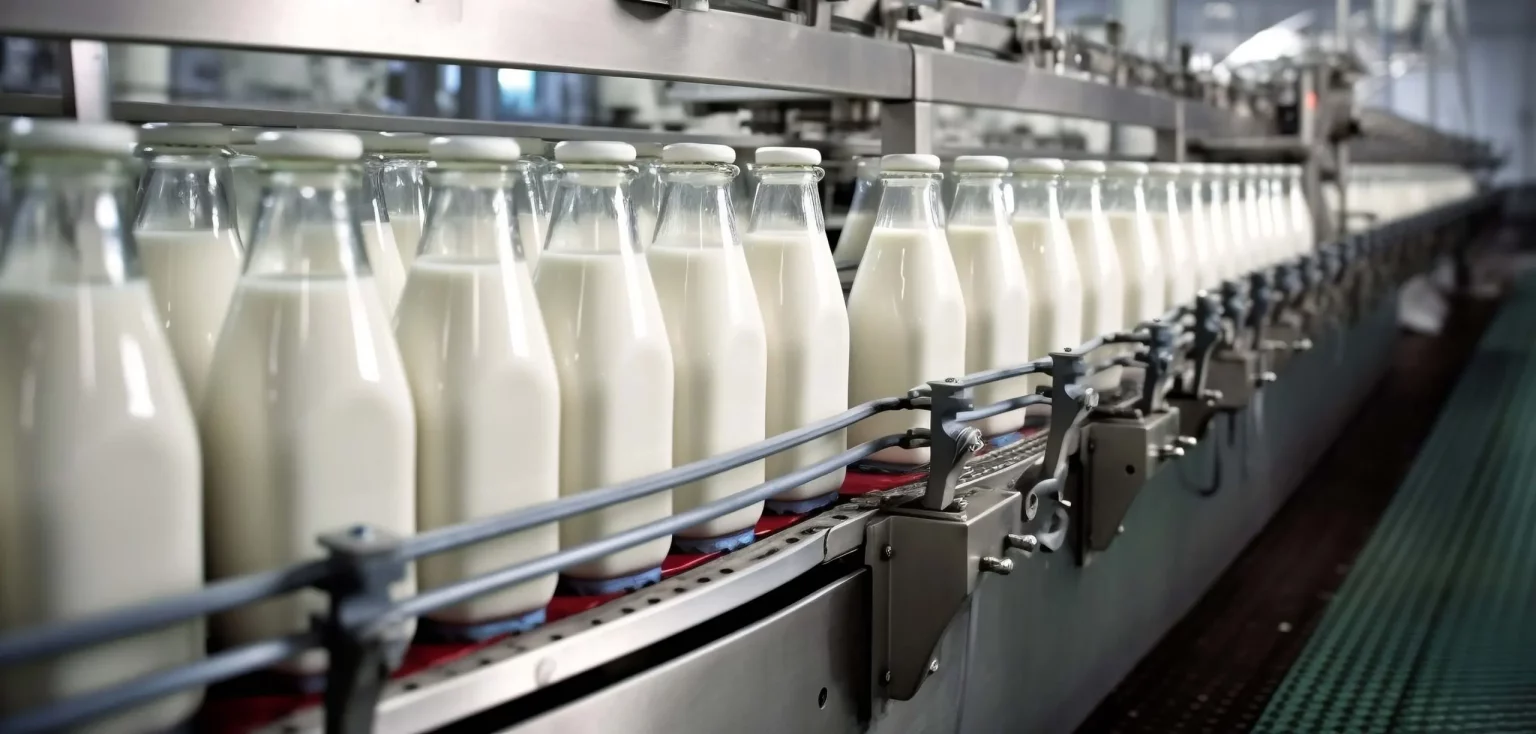 Dairy ProcessingPasteurizers, CIP systems, transfer lines
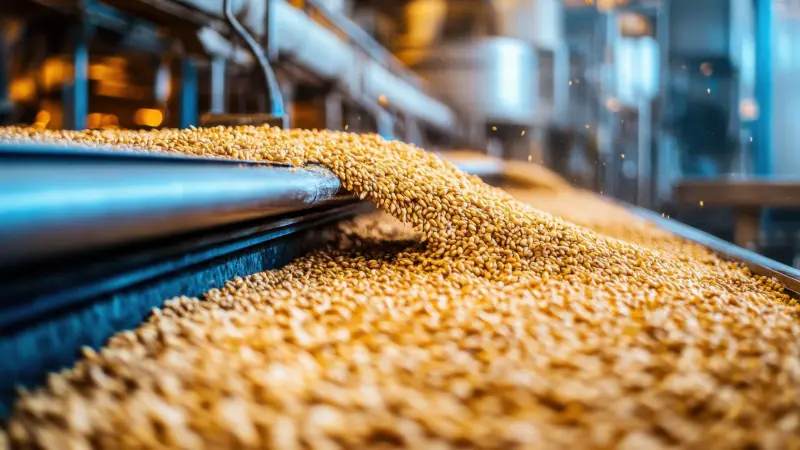 Food ProcessingSanitary fittings, valves and tubing
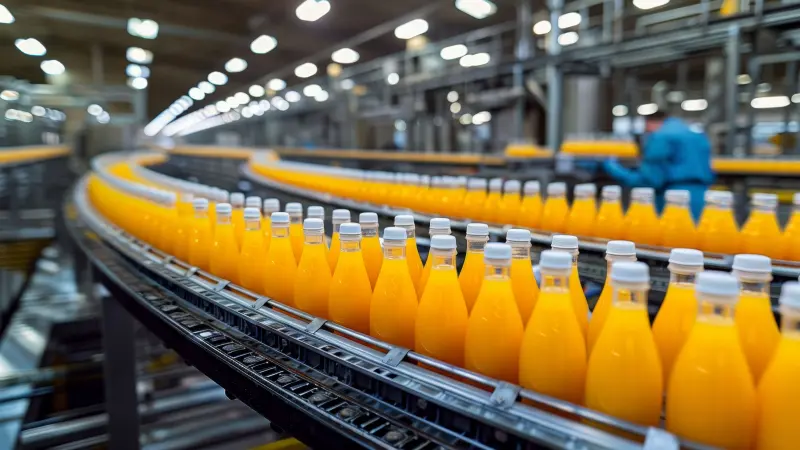 Beverage LinesBottling, mixing and hygienic transfer
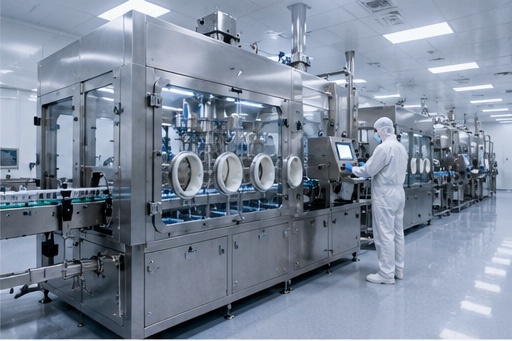 PharmaceuticalHigh-purity 316L and documentation
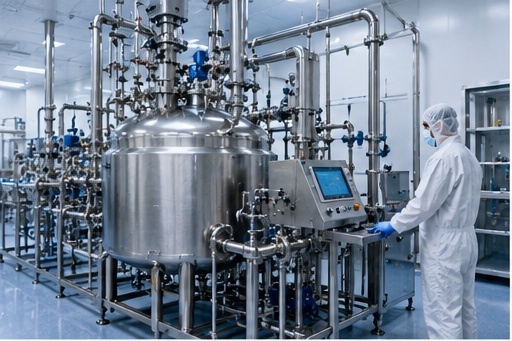 BiotechnologyBioreactors, skids and cell culture support
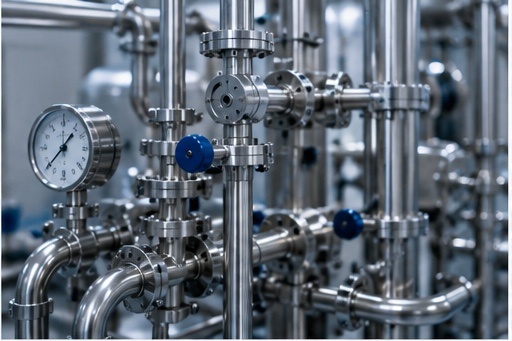 OEM / ContractorsProject RFQ support and secondary supply
CE-BFV-A Series · Hygienic Flow Control
Compact 316L stainless steel butterfly valve engineered for hygienic transfer lines, tank outlets, CIP/SIP circuits and automated food, dairy, beverage, pharmaceutical and biotech process systems.
Product Overview
The CE-BFV-A sanitary butterfly valve is specified for clean process lines where quick quarter-turn shutoff, compact body geometry and reliable CIP/SIP cleanability are required. It is designed for integration into food, dairy, beverage, pharmaceutical and biotech process systems using sanitary clamp or weld-end connections.
Disc and seat geometry are selected to support clean transfer, reduced hold-up and practical clean-in-place operation.
Available for manual service points or automated process lines using pneumatic actuator packages by RFQ.
Compatible with common hygienic piping layouts, valve manifolds, tanks, skids and CIP/SIP utility circuits.
Engineering Features
Use these points to align valve configuration before submitting a technical RFQ.
Disc-to-seat compression provides shutoff performance while maintaining a simple, cleanable internal profile.
Seat material should be selected based on media, temperature, cleaning chemicals and food/pharma compatibility.
Multi-position handles are available for manual operation; pneumatic actuators can be specified for automated lines.
Internal wetted surfaces can be specified for standard sanitary service or higher-finish requirements by RFQ.
Clamp ends support serviceability; weld ends support permanent hygienic piping and skid fabrication.
Material traceability, inspection notes and finish documentation can be included in the procurement package.
Technical Specifications
Final ratings and dimensions should be confirmed against the approved supplier drawing and operating conditions.
| Parameter | Typical Specification |
|---|---|
| Product Series | CE-BFV-A Sanitary Butterfly Valve |
| Body / Disc Material | 316L stainless steel; 304 available for selected utility applications by RFQ |
| Connection Types | Tri-Clamp, butt weld; DIN / SMS / RJT / I-Line options by request |
| Nominal Size Range | 1/2 in to 4 in typical sanitary range; larger sizes by RFQ |
| Pressure Rating | Up to 10 bar typical, subject to size, seat material and temperature |
| Temperature Range | Approx. -20°C to +150°C depending on elastomer selection |
| Seat Materials | EPDM, FKM, silicone; FDA-compliant elastomers available |
| Operation | Pull handle, multi-position handle, pneumatic actuator, electric actuator by RFQ |
| Surface Finish | Ra ≤ 0.8 μm typical sanitary finish; electropolish option by request |
| Standards Language | 3-A, FDA, ASME BPE / EHEDG design references where applicable |
Butterfly valve performance depends on how it integrates with tubing, gaskets, clamps, actuators and process cleaning conditions.
316L stainless steel and sanitary finish options help support food, dairy, beverage and high-purity process environments.
Applications
Use sanitary butterfly valves where compact installation, fast operation and sanitary line isolation are required.
Suitable for clean product lines, batch transfer, utility isolation and plant maintenance replacement programs.
Commonly used around pasteurization, transfer, CIP return, tank outlets and hygienic distribution circuits.
Supports compact valve stations, product transfer lines and process utility service in beverage facilities.
Can be specified for selected high-purity utility and process skid applications where butterfly valve geometry is acceptable.
Useful for routing, isolation and automated cleaning sequences when seat material and temperature are matched correctly.
Works well in skid-mounted systems where footprint, actuator clearance and repeatable operation matter.
Sizes & Dimensions
Available in DN25 through DN150 with tri-clamp, weld or flanged ends. Compact wafer-style body for tight installations.
| Nominal | DN | OD (mm) | Tri-Clamp (mm) | Body Width (mm) | Cv | Weight (kg) |
|---|---|---|---|---|---|---|
| 1" | DN25 | 25.4 | 50.5 | 38 | 45 | 0.8 |
| 1½" | DN40 | 38.1 | 64.0 | 46 | 90 | 1.2 |
| 2" | DN50 | 50.8 | 77.5 | 54 | 180 | 1.8 |
| 2½" | DN65 | 63.5 | 91.0 | 57 | 320 | 2.5 |
| 3" | DN80 | 76.2 | 91.0 | 64 | 500 | 3.5 |
| 4" | DN100 | 101.6 | 119.0 | 70 | 900 | 5.0 |
| 6" | DN150 | 152.4 | 183.0 | 76 | 2100 | 9.5 |
Operating Conditions
Performance varies by seat material. EPDM is standard; silicone and Viton offer extended temperature ranges.
Actual ratings depend on size, material and operating conditions. Confirm via RFQ for project-specific requirements.
Standards & Compliance
Full documentation packages available including MTR, 3.1 certificates, surface roughness reports and pressure test records.
Sanitary equipment for milk and milk products processing.
Surface finish, materials and design for pharma/biotech.
European hygienic engineering and design certification.
Food contact materials compliance for seats and seals.
Material specification for 304/316L bodies.
Dimensional standard for tri-clamp fittings.
Standardized actuator mounting for automation.
Explosive atmosphere directive for actuators.
Product Variants
Multiple variants available to match your application requirements. Browse related products for complete process line coverage.
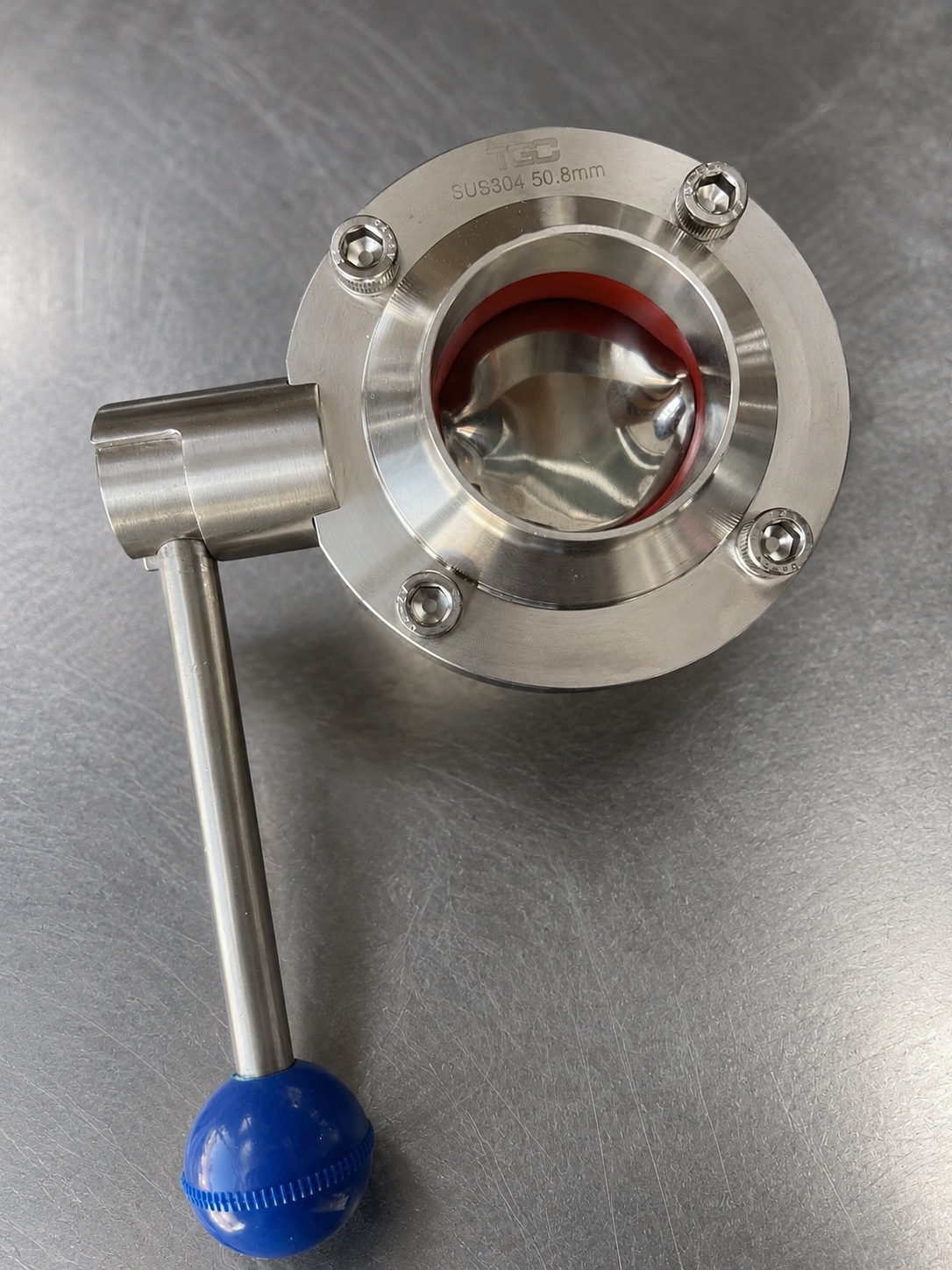
Lever-operated with multi-position handle for manual shut-off and throttling applications.
Request quote →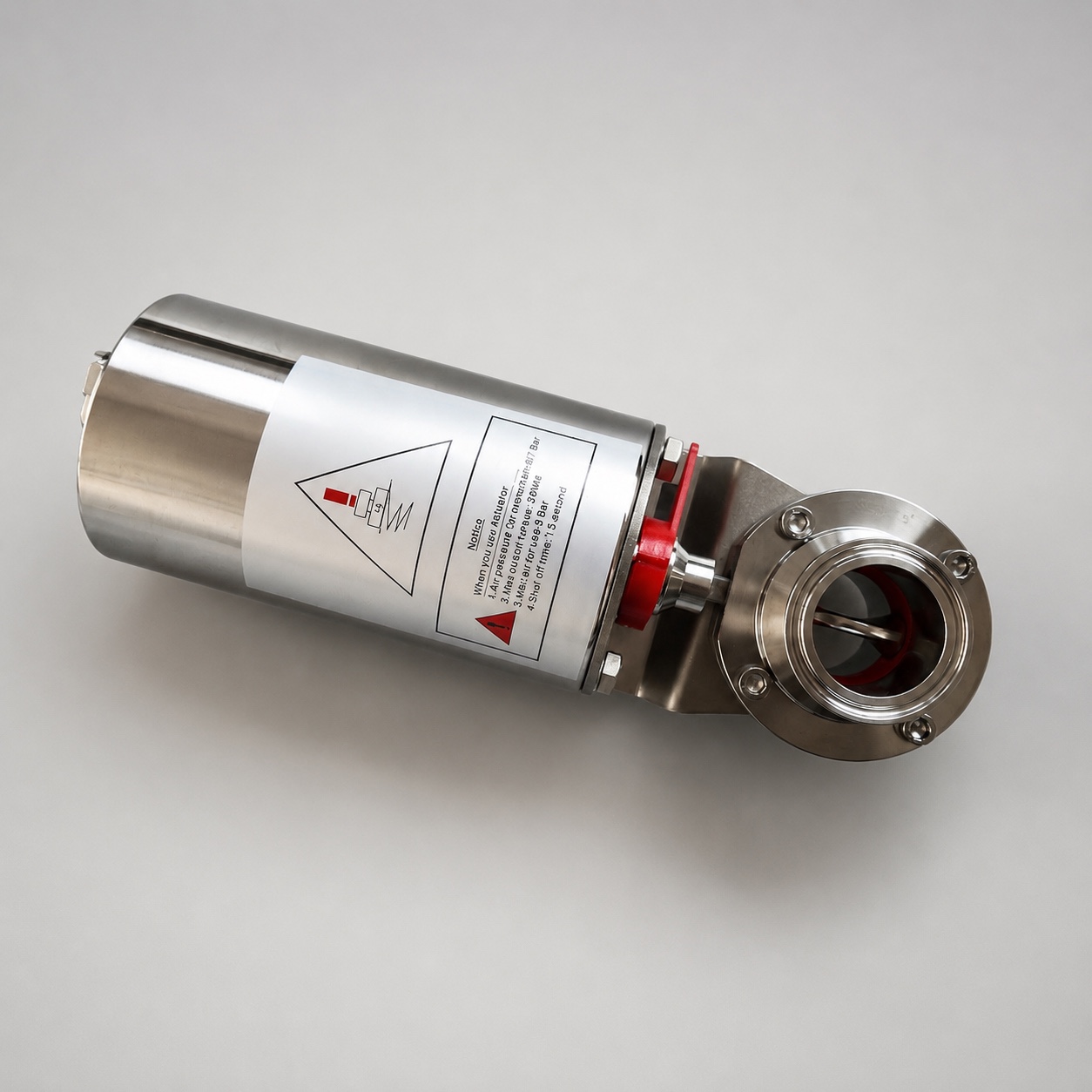
Air-actuated for automated CIP/SIP integration and remote process control.
Open page →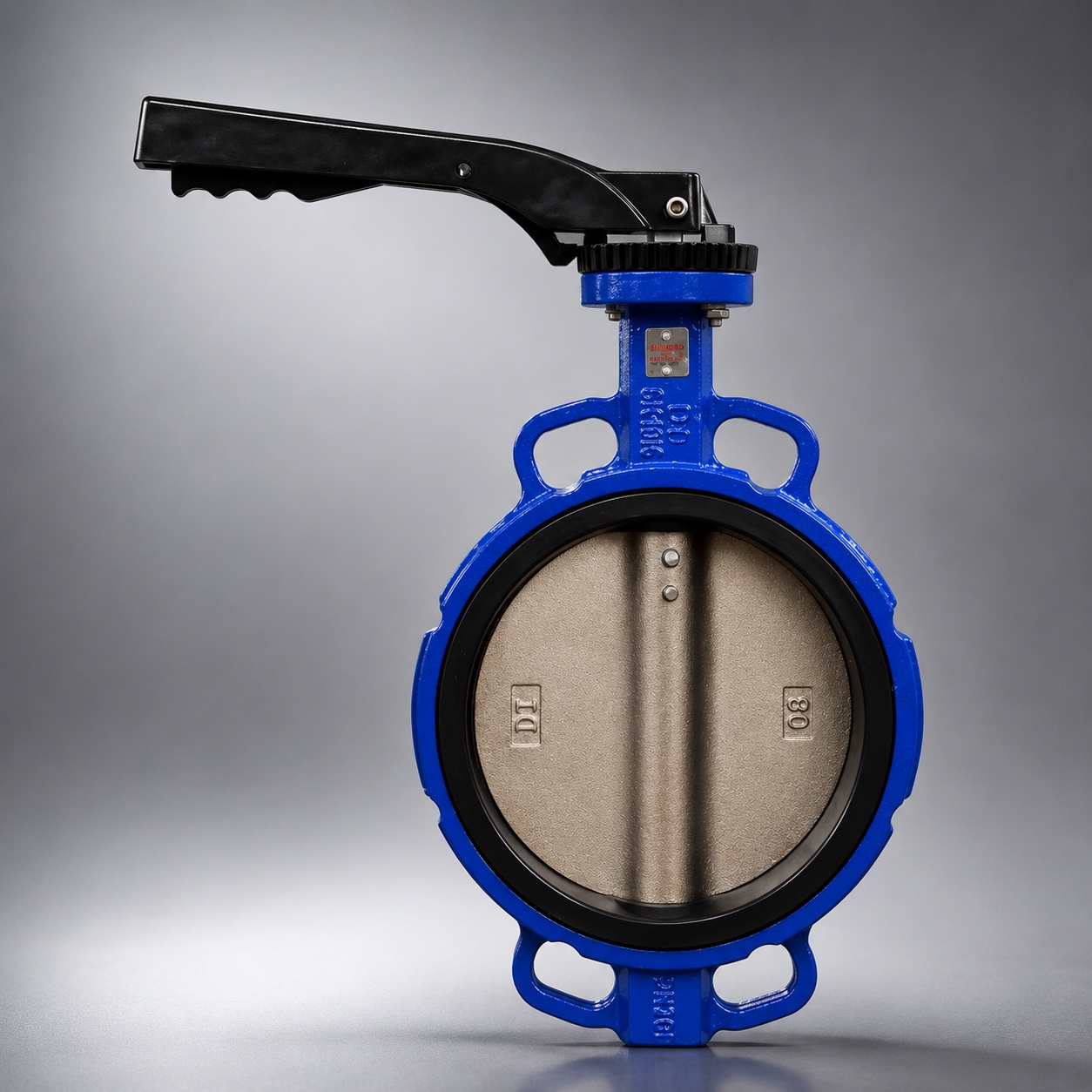
Compact wafer-type body for installation between flanges in tight spaces.
Request quote →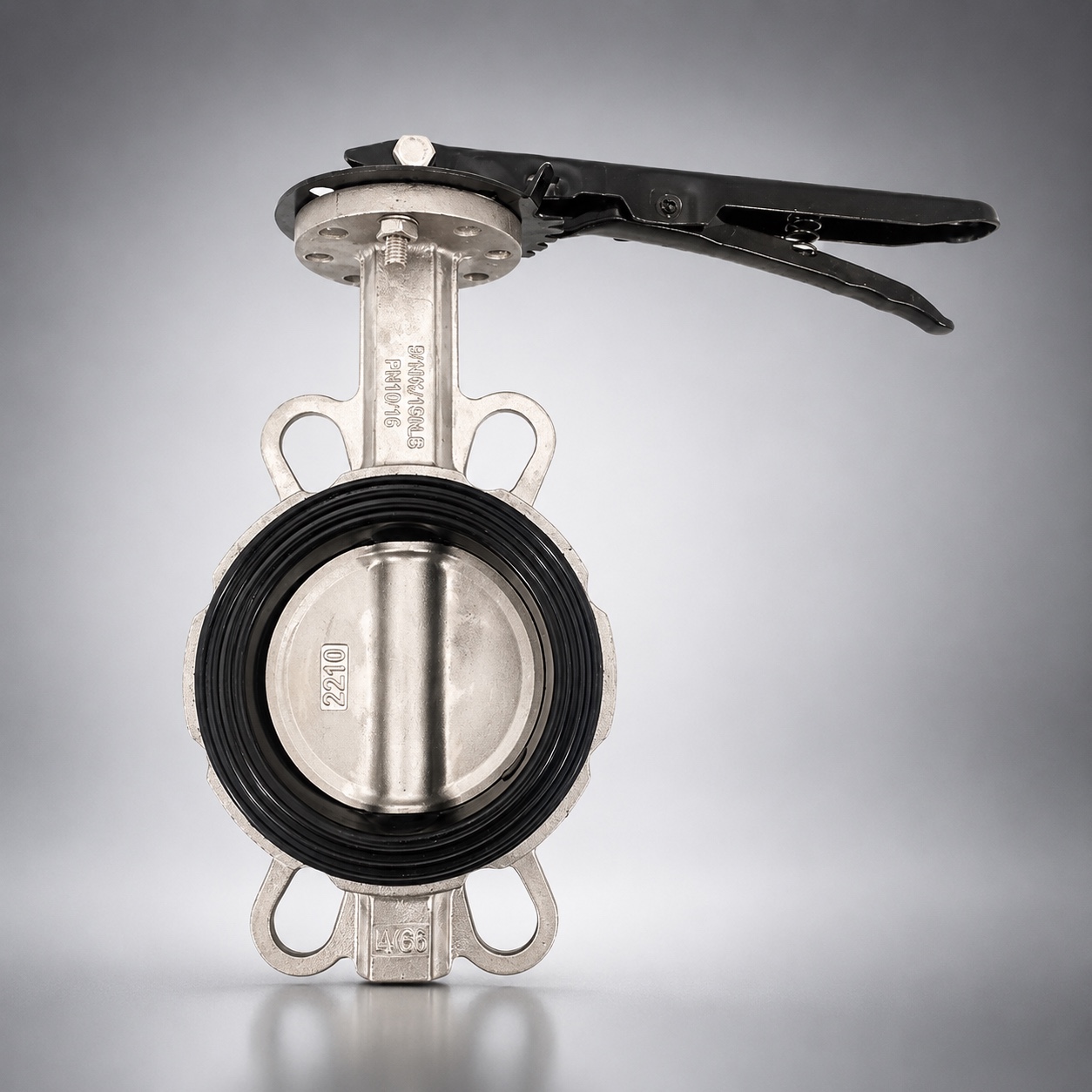
Lugged body with threaded holes for dead-end service and pipe-removal capability.
Request quote →RFQ Preparation
A clear RFQ reduces revision cycles and helps match the valve to your process, cleaning method and documentation requirements.
| RFQ Field | What to Provide |
|---|---|
| Size | Tube OD / DN / inch size and quantity |
| Connection | Tri-Clamp, weld, DIN, SMS, RJT or I-Line |
| Seat Material | EPDM, FKM, silicone or process-specific elastomer requirement |
| Operation | Manual handle, pneumatic actuator, spring return, double acting or electric |
| Service Conditions | Media, pressure, temperature, cleaning chemicals and CIP/SIP cycle |
| Documentation | MTR/MTC, finish report, inspection documents, certificates or project submittals |
Common Questions
Engineering and procurement questions we hear most often. For project-specific guidance, send your application details via RFQ.
Butterfly valves are preferred for larger sizes (typically 2" and up) where ball valves become heavy and expensive. They offer faster quarter-turn operation, lower torque, smaller footprint and lower cost in larger sizes.
Ball valves remain better for full-bore flow, throttling control and where complete shutoff is critical. Butterfly valves are ideal for on/off service, larger lines and where space is constrained.
For continuous service above 130°C, choose silicone (up to 200°C) or Viton/FKM (up to 200°C). For SIP cycles at 121–135°C, silicone or PTFE-faced seats provide best durability.
EPDM is standard for ambient and CIP service up to 130°C. For sustained high temperature or aggressive chemicals, specify silicone, Viton or PTFE-faced seats.
Yes, but with limitations. Effective control range is typically 30–70° of disc rotation. Outside this range, control authority drops and cavitation risk increases.
For dedicated control applications, request a butterfly valve with positioner and characterized disc. For simple throttling, manual valves with multi-position handles are available.
Wafer style fits between two pipe flanges using long bolts. Lug style has threaded inserts allowing one pipe to be removed without affecting the valve. Double-flanged has integrated flanges.
For sanitary service, tri-clamp connections are most common and avoid flange complications entirely. Specify connection style based on pipe spec.
Manual lever operation is suitable up to DN100 (4"). Above this size, gearbox or pneumatic actuator is recommended due to high break-away torque.
Actual torque depends on size, seat material, differential pressure and media. Provide line conditions when specifying for actuator sizing.
Standard documentation includes EN 10204 3.1 MTR for body and disc materials. Optional packages include FDA compliance for seats, ASME BPE surface finish reports, ATEX certificates.
For pharmaceutical applications, specify ASME BPE compliance and request full traceability package.
Standard actuators are not ATEX-certified. For hazardous area service, specify ATEX-rated solenoid valves, limit switches and proximity sensors with the actuator package.
Provide zone classification (Zone 1, Zone 2) and gas/dust group with your RFQ. Full ATEX-rated assemblies available.
Send size, connection, seat material, actuator type, quantity, service conditions and documentation requirements for a structured technical RFQ.
Download the product datasheet for technical specifications, dimensional references, material data, applicable standards and RFQ guidance. Suitable for procurement, engineering review and project documentation.